Ten Reasons to Use EFT to Break Free from Food Cravings

An explanation of the reasons for using EFT to break free of food cravings
- EFT targets the emotional roots of cravings
- EFT resets the brain
- Research info: neural changes with EFT in adults with food cravings
- EFT promotes calm and reduces stress
- EFT supports better sleep
- EFT is quick and easy to learn
- EFT is easily accessible and flexible
- EFT helps release limiting beliefs
- EFT works when willpower alone fails
- EFT works gently and encourages self-compassion
- EFT supports lasting long-term change
- Next steps
- References
Food cravings can feel overwhelming, as if they have a life of their own. You know the food isn’t what your body truly needs, yet the pull is strong and resisting feels exhausting. Emotional Freedom Techniques (EFT, or tapping) offers a gentle, practical, and research-backed way to release cravings at their root. Here are ten reasons why EFT is such a powerful tool for finding freedom around food.
1. EFT targets the emotional roots of cravings
Cravings are rarely just about hunger. Often, they are tied to emotions — fear, sadness, loneliness, or memories of comfort.
How EFT works is in its name: Emotional Freedom Techniques – applying the techniques as you gently acknowledge those feelings, brings about “freedom” or release from the intense charge of emotional pain that you have been self-medicating and soothing with food cravings and addictions. These painful emotions may have their roots in troublesome times in your life or a bothersome specific event.
EFT has specific and efficient techniques for very gently revisiting such events or periods in your life, in order to remove the emotional charge that was imprinted at the time that has been keeping the craving alive. This enables the body and mind to release associated thoughts, feelings, tension, stressors and behaviour patterns. Once this release is fully enabled, the emotion softens, and the craving usually fades too.
For this sort of deeper work with past events, it is very important to be thorough and clear all aspects contributing to the original emotional charge. It is undoubtedly best to have the guidance of a trained and certified EFT practitioner for this work.
2. EFT resets the brain
Cravings aren’t just willpower battles; they are wired into the brain. Research using fMRI brain scans1 has shown that EFT reduces neural activity linked to cravings. In other words, tapping literally helps quiet down the “must have it now” response in your brain. This means change isn’t just imagined — it’s visible in brain activity.
You can see examples of brain images that clearly show the difference before and after an EFT intervention to the right of this text on a laptop, or by scrolling down if you are reading this on a phone. These are from research carried out at Bond University in Australia by Peta Stapleton and her team in 2018-19. These results are consistent with the earlier Harvard research, also using fMRI, into acupuncture that showed that acupoint stimulation has the capacity to produce “extensive deactivation of the limbic-paralimbic-neocortical system”2
For further detail, please see my article “How EFT Works”
There have been more than a dozen papers researching EFT for cravings spanning the period since 2012. You can download a pdf here containing citations and abstracts for each of these
3. EFT promotes calm and reduces stress
Stress is one of the biggest triggers for food cravings. EFT has been shown to lower cortisol, the stress hormone, helping you feel calmer, more balanced, and in control. When your nervous system is soothed, the craving loses urgency.
👉 If stress is a driver for your cravings, my EFT for Food Cravings programme includes guided tapping sessions to help you calm your body and reduce stress-driven eating. Find out more about the programme here, or try out part of the first of the nineteen tapping for food craving videos for free on YouTube here.
4. EFT supports better sleep
Poor sleep leaves the brain more reactive to high-calorie, sugary, or carb-heavy foods. EFT can help by lowering stress and improving relaxation, which in turn supports better sleep. With your energy restored, you’ll find it easier to make balanced choices around food.
5. EFT is quick and easy to learn
EFT is literally at your fingertips. Once you know the tapping points, you can use them anytime — at your desk, in your kitchen, or even before opening the fridge. Many people notice a shift in cravings within minutes. It’s a form of emotional first aid you can take anywhere.
6. EFT is easily accessible and flexible
You don’t need to travel or join a group if that doesn’t feel right for you. EFT can be learned through online videos, courses, or live webinars, allowing you to work privately at your own pace. At the same time, guided support is available if you prefer learning with others and at EFT Devon we can easily help you find the right practitioner to work with on a one-to-one basis. Here are links to some of the resources you might like to try.
EFT Basic Introductory Course (Free)
One-to-one EFT sessions
Emotional Freedom Techniques / Tapping for Food Cravings Online Programme
In-depth EFT Training
7. EFT helps release limiting beliefs
Associated with cravings, many people carry unconscious beliefs that keep them stuck. Thoughts like “I can’t change,” “It’s too hard,” “I don’t deserve it,” or “It doesn’t feel safe to be at my goal weight.” EFT with guidance from a fully trained practitioner allows you to uncover and dissolve these beliefs. With persistence, you can free yourself from old patterns of core issues and beliefs (limiting rules you have lived by) and discover new choices, behaviours, and ways of being.
Whilst anyone can learn and use EFT for emotional first aid, to regulate emotions, to calm emotional or physical pain in the moment, EFT practitioners do in-depth training on how to use EFT/Tapping to get to the roots of a problem, to uncover one or many deep-seated core issues, to fully collapse the issue leaving their client feeling very much lighter. Some even use the word transformed!
👉 In my Food Cravings Programme, I walk you through tapping on some of the most common limiting beliefs that hold people back.
8. EFT works when willpower alone fails
Most diets rely on willpower, but fighting cravings head-on is exhausting. EFT doesn’t suppress desire — it reduces it. Instead of battling yourself, you find that the craving simply quiets down. That makes healthy choices far easier to maintain.
9. EFT works gently and encourages self compassion
Willpower often comes with self-criticism and harsh inner rules. EFT is built on principles of self-acceptance and compassion. The process itself is gentle: you acknowledge how you feel, while at the same time affirming acceptance of yourself. This fosters long-term wellbeing instead of guilt or shame.
Part of the power of EFT is in the language used. The affirmatory set-up statement always starts with the words “Even though”, followed by a negative, thus taking some of the sting out of the negative. There then follows a self-acceptance statement that reminds us that however bad the issue is we having going on, we are still ok, we can accept ourselves just as we are. For example:
“Even though I keep giving in to this craving, I deeply and completely accept myself”
“Even though I have this craving, I accept who I am with this feeling anyway.”
Younger people tend to favour somewhat looser statements such as:
“Even though I’m scared of losing this match, we’ve got this!”
or
“Even though I’m scared of losing this match, I accept myself with this feeling and choose to know I’ve got this/I can do this”
Repeating the negative phrase as you tap round all the tapping points allows you to just sit with, observe and tolerate the discomfort whilst the tapping sends calming signals to the limbic brain.
And it works gently and elegantly, like magic 🪄
10. EFT supports lasting long-term change
EFT isn’t just about food cravings. It gives you a lifelong tool for managing stress, regulating emotions, and supporting personal growth. Instead of relying on external rules, you build inner resilience and freedom. Cravings become opportunities to practice self-care, not battles to be fought.
An initial investigation of neural changes in overweight adults with food cravings after emotional freedom techniques 3
“Conclusion: The findings indicated EFT may decrease limbic region brain activity and reduce food related symptoms in overweight/obese individuals. This study also illuminates the neurological mechanisms at work behind the many successful outcome studies of EFT for weight loss.”
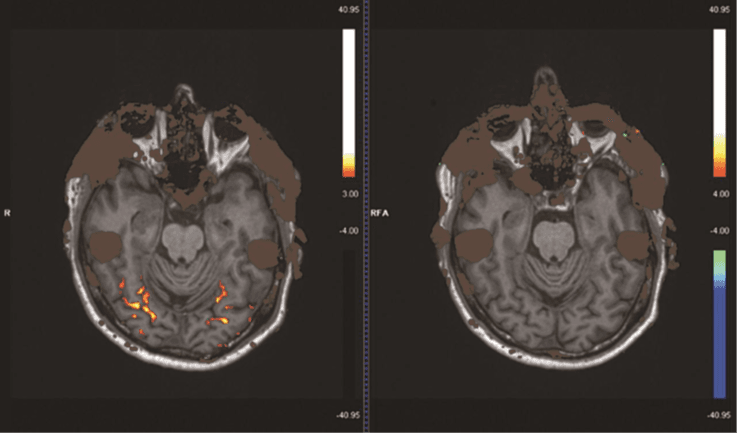
Note: the yellow, orange and red areas active on the pre scan are relatively deactivated in the post scan of the EFT group
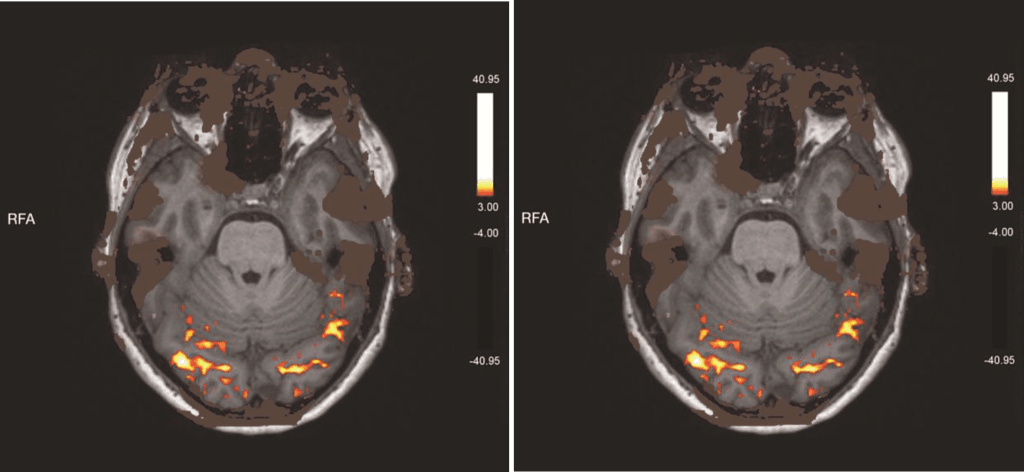
Note: the yellow, orange and red areas active on the pre scan that are still relatively activated in the control group.
You can download a copy of the paper for free here, from the Open Access publication:
https://www.lidsen.com/journals/icm/icm-04-01-010
Next steps
If you’d like to experience these benefits for yourself, explore my EFT for Food Craving Programme. It includes:
- EFT Basics Course (perfect if you’re new to tapping)
- EFT for Food Cravings Course (19 videos, 150 minutes of practical guidance)
- Monthly live webinars and recordings with me for ongoing support
📺 You can also watch my free YouTube video: How to Start Tapping on a Craving.
📑 And for those who love the science, download my free PDF summary of EFT research into food cravings.
💖 Remember: you don’t need to fight cravings with willpower alone. With EFT, you can release the emotional roots, calm your body, and create freedom around food — gently and sustainably.
References
- Stapleton, P., Buchan, C., Mitchell, I., McGrath, Y., Gorton, P., & Carter, B. (2019). An initial investigation of neural changes in overweight adults with food cravings after emotional freedom techniques. OBM Integrative and Complementary Medicine, 4(14), 10-21926.
Direct link: https://www.lidsen.com/journals/icm/icm-04-01-010 ↩︎ - Fang, J., Jin, Z., Wang, Y., Li, K., Kong, J., Nixon, E. E., . . . Hui, K. K.-S. (2009).
The salient characteristics of the central effects of acupuncture needling: Limbic-paralimbic-neocortical network modulation. Human Brain Mapping, 30, 1196–1206. doi:10.1002/hbm.20583 ↩︎ - Stapleton, P., Buchan, C., Mitchell, I., McGrath, Y., Gorton, P., & Carter, B. (2019). An initial investigation of neural changes in overweight adults with food cravings after emotional freedom techniques. OBM Integrative and Complementary Medicine, 4(14), 10-21926.
Direct link: https://www.lidsen.com/journals/icm/icm-04-01-010
↩︎